8 Expenses to Review Before Year-End to Cut Costs and Keep More Profit
Before the year ends, check these 8 expenses. Cancel what's wasted, renegotiate renewals, and turn cost cuts into profit.
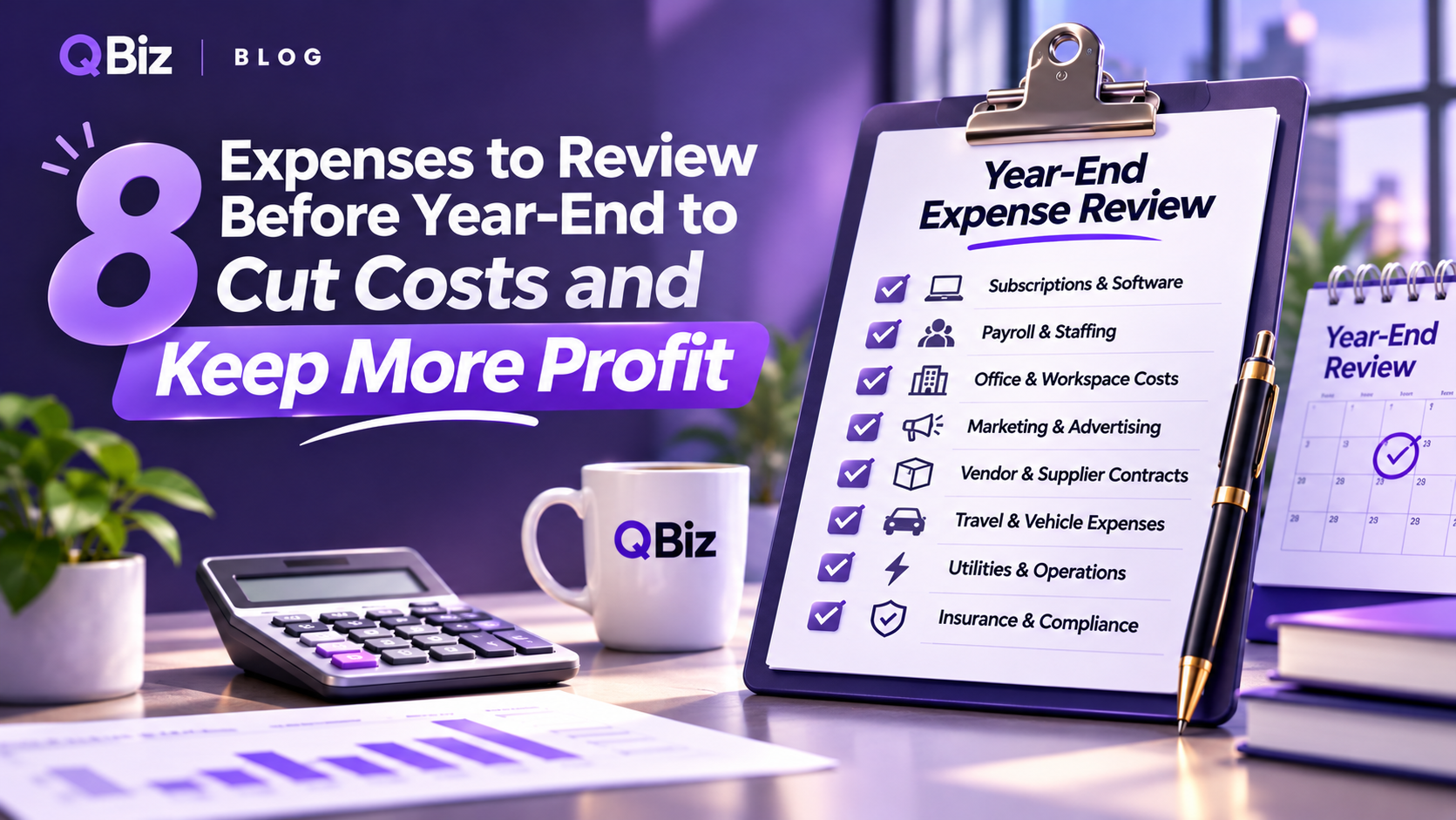
before the year ends, review your software subscriptions, card processing fees, ad spend, bank and account fees, insurance and vendor contracts, labor costs, slow-moving inventory, and the cost of any debt. These are the expenses most likely to hide waste, and many renew or reset in January, so December is the best time to act.
A year-end expense review isn’t about cutting everything. It’s about finding the costs that no longer earn their place, so you can cut business costs without hurting sales. Here’s where to look, and how to do it without losing a weekend to spreadsheets.
Why Review Expenses at Year-End?
Annual plans and contracts renew in January, so it’s your last cheap chance to cancel or renegotiate. A full year of spending is also easy to compare, and it makes next year’s budget far more realistic.
If you want a simple habit to go with the review, start with our guide on how to track cash flow without hiring a CFO.
1. Software and Subscriptions
Subscriptions are the easiest costs to forget. A tool someone tried once, a second app that does the same job, or a plan with seats nobody uses can sit on your card for months.
Pull your last twelve months of card and bank statements, and list every recurring charge. Cancel what’s unused, downgrade what’s oversized, and ask about annual discounts for what you keep. As a simple example, a $79 monthly tool you don’t use costs $948 a year.
2. Card Processing Fees
Processing fees come out of every card sale, so even a small rate difference adds up over a year. Many owners have never added up their total.
Look at your last three statements and divide total fees by total card sales to get your effective rate. If it’s higher than you expected, compare options. Our guide on why credit card processing fees are so high explains where each cost comes from, and myQBiz.ai Merchant Services offers a free estimate based on your own statements, with no pressure to switch.
3. Advertising Spend
Ads are the expense that looks best on a dashboard. Clicks, impressions, and conversions are easy to celebrate, but the real question is whether a campaign made you money after costs.
For each channel, compare what you spent with the profit it brought in, not just the revenue. Pause campaigns that don’t pay back, and move that budget to the ones that do. This is one of the places the free AI Business Advisor helps most, because it connects to Meta Ads alongside Stripe, Shopify, and QuickBooks and answers questions like “is my ad spend actually profitable?” in plain English.
4. Bank and Account Fees
Account fees are small enough to ignore and regular enough to matter. Look for monthly maintenance charges, wire and ACH fees, overdraft fees, minimum balance penalties, and charges for extra users or cards.
If a fee shows up every month, ask your bank to waive it or move to a plan that fits how you actually use the account.
5. Insurance and Vendor Contracts
Many business insurance policies and supplier contracts renew automatically. Prices can creep up quietly, and coverage may no longer match what your business does.
Before renewal, get at least one competing quote, confirm your coverage still fits, and ask long-term vendors whether a loyalty discount is possible. A five-minute call can save more than a month of careful budgeting.
6. Labor and Contractor Costs
Labor is usually the biggest expense, so small inefficiencies are costly. Check overtime hours, idle shifts, and contractor invoices that have grown past the original scope. You rarely need to cut people. Often it’s about matching hours to demand.
7. Slow-Moving Inventory and Supplies
Stock that sits on a shelf is cash that can’t be used. Review which products haven’t moved in 90 days or more, and decide whether to discount them, bundle them, or stop reordering.
8. The Cost of Your Debt
Financing isn’t a bad expense, but it should be reviewed like any other. List every loan, line of credit, and advance with its balance, rate or total cost, and repayment schedule.
If something is expensive or no longer fits your cash flow, see whether a better-matched option exists. myQBiz.ai Lending puts nine loan programs into one guided application with a human loan specialist, and checking eligibility uses a soft credit inquiry that doesn’t affect your credit score. For a wider view, our guide to small business financing options compares them.
How Does Cutting Costs Increase Profit?
Every dollar you cut from expenses goes straight to profit, if your sales stay the same. That’s why cost reviews are so powerful. Raising profit through sales alone means selling more at your current margin, while cutting a wasteful expense improves your margin right away.
The catch is that you can only cut what you can see. If your numbers are spread across Stripe, Shopify, QuickBooks, and your ad accounts, it’s hard to spot what’s drifting.
How Can You Spot Wasted Spending Faster?
Connect your tools and ask direct questions instead of digging through reports. Which expenses went up this year? Where is my margin shrinking? What recurring charges did I forget about?
The AI Business Advisor from myQBiz.ai answers these using your own data, and it’s free for launch users with no credit card required. It doesn’t replace your accountant, but it helps you walk into year-end with a clear list to review.
Key Takeaways
Do a year-end expense review of subscriptions, card fees, ad spend, bank fees, contracts, labor, inventory, and debt.
Use December for renewals, since many contracts reset in January.
Every dollar cut from a wasteful expense goes straight to profit.
Compare spending with results, especially for ads.
You can only cut what you can see, so get your numbers in one place first.
Frequently Asked Questions
What should I review before year-end as a small business owner? Start with recurring subscriptions, card processing fees, advertising spend, bank fees, insurance and vendor contracts, labor costs, inventory, and debt costs.
How do I reduce business expenses without hurting the business? Focus on waste, not value. Cancel unused tools, renegotiate renewals, and cut ads that don’t pay back, while protecting what drives sales.
When is the best time to review business expenses? Before December 31, since many plans and contracts renew in January and your full year of data is ready to compare.
Can AI help me find where my business is losing money? It can help you review your numbers faster and flag patterns, such as growing costs or shrinking margins. Your accountant is still the right person for taxes and compliance.
Find the Costs Hiding in Your Numbers
Before the year closes, give your expenses a proper look. Connect your tools and let the advisor show you what changed, what grew, and what’s worth cutting.
Connect your tools and review your expenses with the free AI Business Advisor. No credit card, no trial clock.