
How to Start a Small Business with AI: A Step-by-Step Guide
Learn how to start a small business with AI, a step-by-step guide covering ideas, branding, marketing, and scaling, plus practical tips and FAQs for new founders.
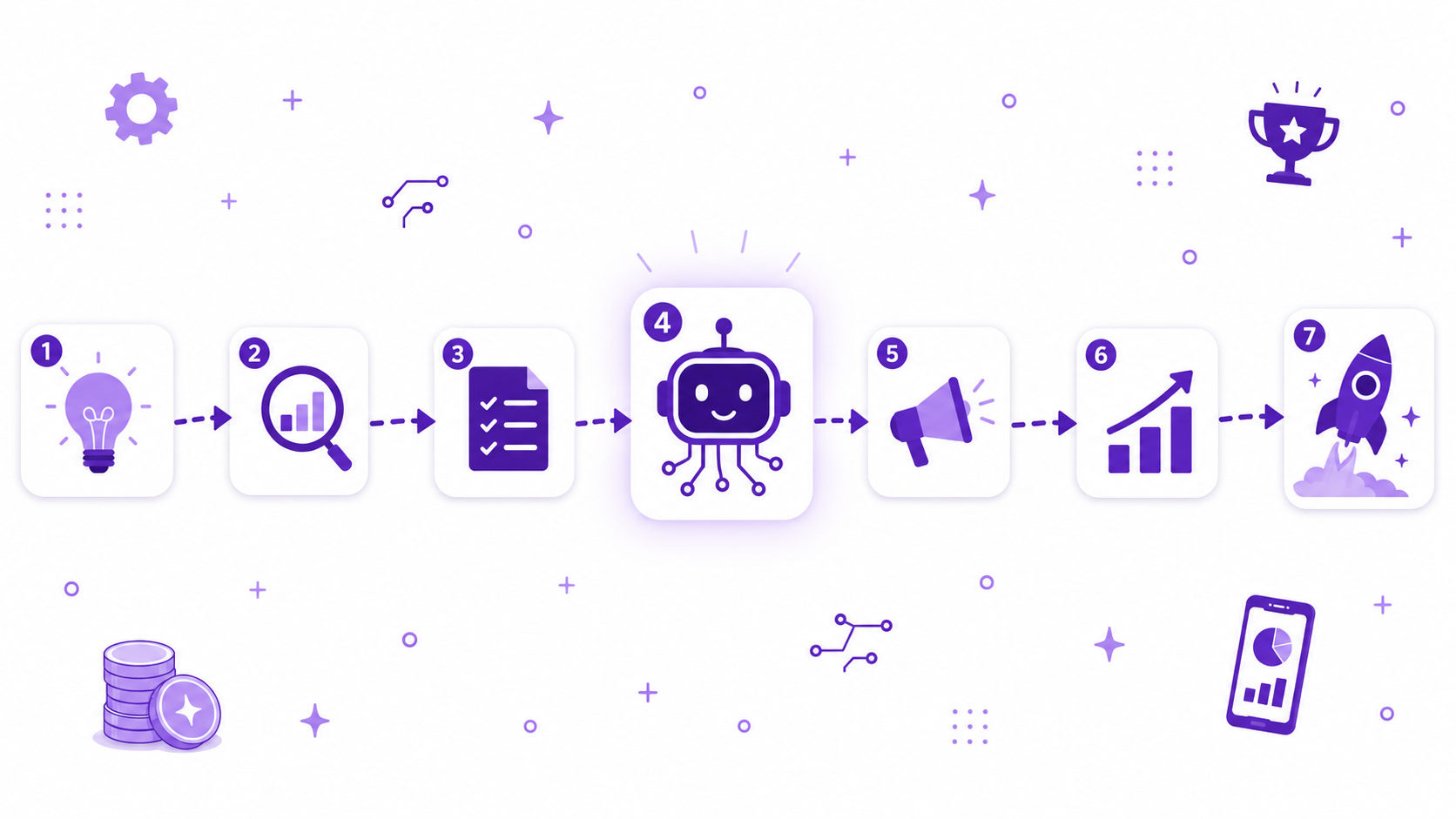
When I originally considered establishing a business, I believed that you required a team, money, and a solid plan before getting started. Starting a small business has typically required hiring a designer for your logo, a copywriter for your website, a developer for your app, and an accountant to handle the numbers well before you make your first sale. The expenses built up, the learning curve was severe, and many brilliant ideas silently died on the to-do list.
That's why understanding how to establish a small business with AI is so important. Artificial intelligence lowers both the financial and talent barriers to getting started; it can study your industry, write your content, design your brand, and automate the tedious tasks that used to consume your week. Just remember one guideline from the start: AI is a copilot, not an autopilot. It accelerates practically every stage of business development, but it cannot replace your judgment, relationships, or accountability as the owner. Here's how to utilize it step by step.
Step 1 — Find and Validate Your Business Idea
The best company ideas are those that combine your skills, hobbies, and real-world market need. AI can assist you in locating that sweet spot and stress-testing it before you commit.
Brainstorm Ideas with AI
Describe your strengths, hobbies, and budget to an AI assistant, and it will suggest possibilities to respond to:
- Suggest business models that match your talents and resources.
- Identify underdeveloped niches and rising trends.
- Identify holes that your competitors are missing.
Don’t overthink it just test it with real people. That’s where the real answer is.
Validate Before You Invest
Before spending serious time or money, use AI to test demand:
- Summarize the competitive landscape and target customers
- Suggest realistic price points
- Draft a customer survey or interview questions
- Spin up a simple landing page to gauge interest
Real signals, sign-ups, replies, and pre-orders matter far more than any prediction, so use these tools to reach actual people faster.
Write a Lean Business Plan
Skip the fifty-page document; a one-pager is plenty to begin. Ask AI to organize it around the essentials:
- The problem you resolve and your solution
- Who are your customers, and how will you reach them?
- How will you make money?
- Basic forecasts include initial costs, monthly expenses, and an approximate break-even point.
The goal here is not perfection, but rather clarity and movement.
Step 2 — Set Up and Brand Your Business
With a proven idea, it's time to establish the business and give it a professional identity.
Handle the Legal and Financial Basics
AI is a useful starting point for the foundations, however it is not the final word.
- Understand the various legal formations (sole proprietorship, partnership, and limited company).
- Learn about standard registration and licensing requirements.
- Learn the fundamentals of bookkeeping and how to track your expenses.
- Open a separate business bank account from the start.
Important: Tax and legal rules vary by location and change often, so confirm anything binding with a qualified accountant or lawyer.
Build Your Brand with AI
This is where AI excels for cash-strapped entrepreneurs. Within minutes, you can:
- Generate dozens of company name ideas and check the available domains.
- Develop logo concepts and color palettes.
- Create a clear homepage, "About" page, and product descriptions.
- Set a consistent tone of speech.
Launch Your Online Presence
It is not necessary to have a custom-built website to start online.
- Use AI-assisted website builders or retail platforms to develop a clean, trustworthy website.
- Set up your social media profiles.
- Prepare a small initial bundle of posts to avoid having empty pages on launch day.
The idea is to build a brand that appears established and trustworthy without incurring agency fees.
Step 3 — Create Your Product and Market It
Now you build what you're actually selling and get it in front of the right people.
Build Your Product or Service
Your offer determines how AI can help.
- Digital products (courses, e-books, templates, software): accelerate writing, designing, planning, and even coding.
- Physical products: explore sources, evaluate materials, and create attractive listings.
- Services: Develop proposal templates, intake forms, and repeatable workflows.
Incorporate your own knowledge and quality control into whatever you create. AI generates the draft; your judgment makes it truly good.
Market Your Business with AI
Marketing is where most small entrepreneurs feel stretched, and AI saves the most time.
- Create a content calendar and write social media updates, newsletters, and blog pieces.
- Create many versions of ad copy and headlines to determine what works.
- Identify SEO keywords and optimize your pages around them.
- Personalize outreach to various client categories at scale.
Keep It Authentic
People can detect generic, mass-produced information, and confidence is difficult to regain once lost. Use AI to handle the heavy lifting, but provide the strategy, brand voice, and genuine relationships that convert interest into devoted customers.
Step 4 — Run, Sell, and Scale with AI
As orders and queries occur, time becomes your most valuable resource. This is where artificial intelligence quietly earns its keep.
Automate Daily Operations
Hand over the repetitive job to AI so you can focus on growth.
- Scheduling, billing, and appointment reminders
- Data entry and routine administration
- Project management tools that organise work and flag priorities
- App connectors allow information to flow without laborious copying.
Boost Sales and Customer Service
AI helps you without replacing human relationships:
- A chatbot or automated FAQ responds to typical questions around the clock.
- Prepare sales scripts, follow-up sequences, and objection responses.
- Respond to queries faster and more consistently.
- Gather and summarize client input to identify patterns.
Simply preserve the personal warmth that small businesses are known for.
Use AI Insights to Grow
Rather than guessing, let facts drive your next step:
- Analyze sales, traffic, and customer behavior to determine what works.
- Decide where to reinvest and what products to double down on.
- Recognize when it's time to hire and expand.
- Create repeatable mechanisms so the firm doesn't rely on you to do everything
Common Pitfalls to Avoid
AI is a strong ally, yet a few blunders can quietly ruin a small business:
- Over-reliance: Never accept AI output as final for legal, tax, financial, or safety purposes; always consult a specialist.
- Accuracy slips: Verify data and claims before posting them under your company name.
- Data privacy: Be clear about how your tools store and use customer information.
- Sounding generic: Edit AI content in your own voice to make your brand stand out.
- Rising costs: Multiple AI memberships mount up quickly, leaving only the few who earn their spot.
Your First-Week Action Plan
Ready to start? Here's a basic checklist for gaining momentum in seven days:
- Describe your company idea in one words.
- Research three competitors.
- Create and share a basic landing page.
- Create your business name, logo, and tagline.
- Create one social media profile.
- Have five conversations with potential clients.
Conclusion
Starting a small business with AI is not about surrendering your goals to a machine; it is about getting an unfair advantage. AI can undertake the heavy lifting that used to need a complete staff and a huge budget, such as verifying your original concept, building your brand, identifying customers, and scaling what works. However, the core of your business will always be human: your vision, judgment, and genuine connection to the people you serve. Use AI as a continual co-pilot, be open to learning and changing, and take the first small step today since the tools have never been more powerful or accessible, and all that is left is for you to begin.
Frequently Asked Questions (FAQs)
Can I start a small business using only AI?
AI can handle a significant portion of the job, research, content, design, and automation, but it cannot completely replace you. You'll still make decisions, interact with customers, and contribute your own expertise. Consider AI to be a formidable assistant that greatly enhances the capabilities of a one-person business, rather than a replacement for the founder.
How much does it cost to start a business with AI?
You can start surprisingly lean. Many AI applications provide free or low-cost plans, so your main expenses will often be a domain name, website hosting, and a few paid subscriptions to the products you use the most. Compared to hiring designers, authors, and engineers, the AI option can significantly reduce launch expenses.
Do I need coding or technical skills?
No. Most AI products are designed for non-technical users, using simple chat or click-based interfaces. If you can define your needs in plain English, AI can help you develop websites, write content, design images, and automate processes without the need for programming.
Which tasks should I not rely on AI for?
Avoid treating AI as the ultimate authority on legal, tax, financial, and health-and-safety issues. It can explain concepts and prepare documents, but always double-check critical details with a competent specialist and verify any data before releasing them.
Which type of business is best to start with AI?
AI is suitable for practically every business, but it is particularly effective for digital and service-based initiatives such as online stores, freelancing, consulting, coaching, content production, and digital products that require a significant amount of research, writing, design, and marketing.
How do I keep my AI-generated content from sounding generic?
Always edit the AI output in your own voice. Include personal tales, real-world examples, and honest opinions, and tailor the tone to your brand. AI provides a solid first draft; human correction is what makes you stand out.