
How to Apply for an SBA Loan: Step-by-Step Guide
A step-by-step guide to applying for an SBA loan — from confirming eligibility and choosing the right program to gathering documents and getting through underwriting faster.
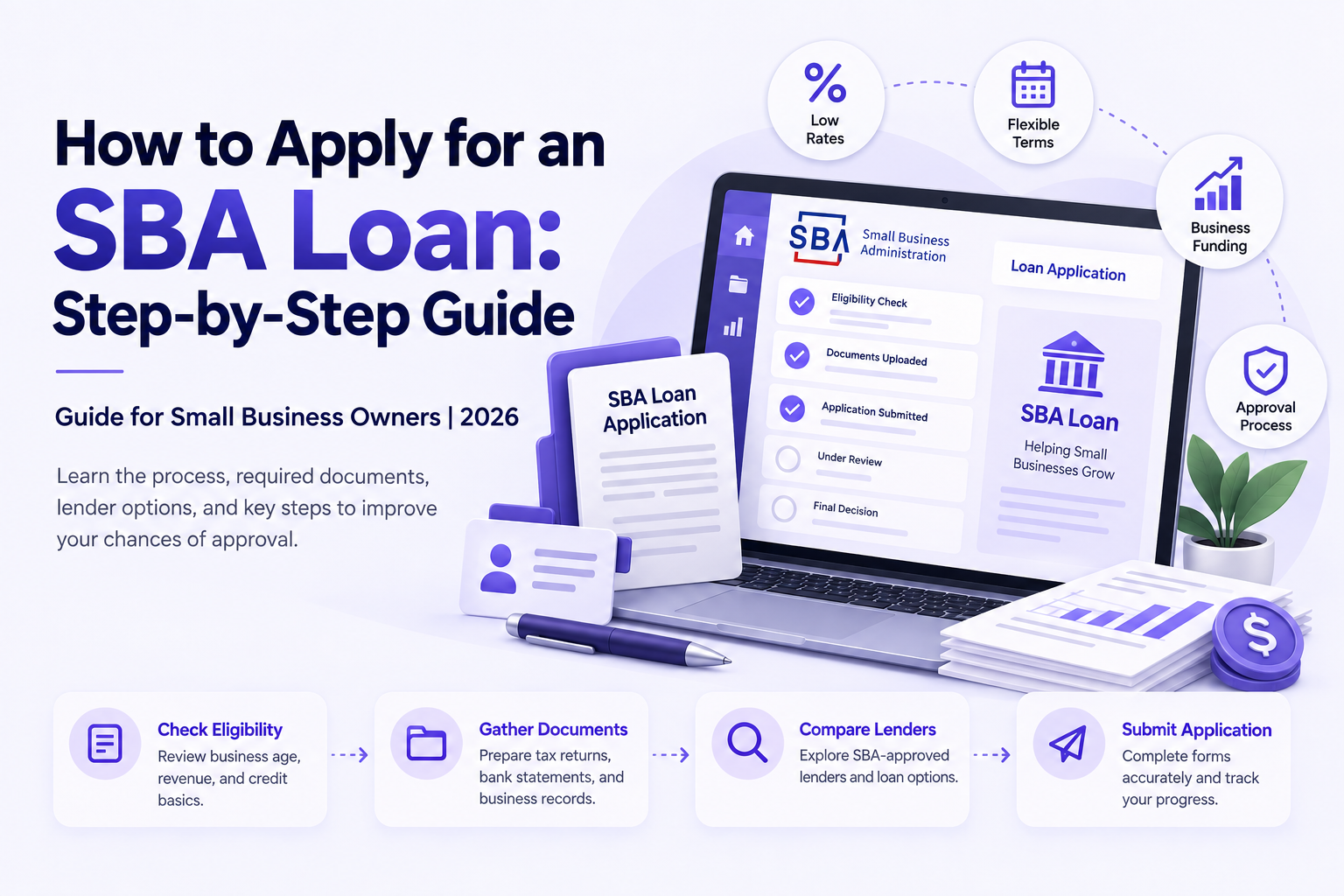
How to Apply for an SBA Loan: Step-by-Step Guide
Getting an SBA loan sounds simple until you actually try to do it. There’s no single form, no single lender, and no single checklist, just a process that changes slightly depending on your loan type, your lender, and how organized your finances already are. Most of the delays business owners run into aren’t because they got rejected. They’re because nobody laid out the steps in order before they started.
This guide does exactly that — for an established business with some operating history and financials already in place. If you’re a newer business without much financial track record yet, the process looks a bit different, and it’s worth reading our dedicated guide on SBA loans for startups instead.
Step 1: Confirm You’re Actually Eligible
Before anything else, check that your business meets the SBA’s basic requirements. In general, you need to:
• Operate as a for-profit business
• Be physically located and doing business in the U.S.
• Fall within the SBA’s size standards for your industry
• Show that you’ve already used reasonable personal or business resources before seeking SBA backing
• Avoid falling into an excluded category (certain lending, speculative, or passive real estate businesses don’t qualify)
This step takes a few minutes but saves weeks. A lot of applications stall halfway through simply because eligibility wasn’t confirmed first.
Step 2: Pick the Right Loan Program
SBA loans aren’t one product — they’re a handful of different programs, and picking the wrong one is one of the most common reasons applications get delayed.
• 7(a) loan — the most flexible option, used for working capital, refinancing, equipment, or buying a business
• 504 loan — built specifically for owner-occupied commercial real estate or major equipment purchases, not day-to-day expenses
• Microloan — smaller amounts, typically under $50,000, useful when you don’t need a large facility
Most businesses applying for general working capital will end up in the 7(a) program, but confirming this upfront avoids filling out the wrong paperwork entirely.
Step 3: Get Your Financial Documents in Order
This is where most of the actual effort goes. Lenders will typically want to see:
• Two to three years of personal and business tax returns
• Current financial statements (profit & loss, balance sheet)
• A business plan explaining how the loan will be used
• A schedule of existing business debt
• Basic legal documents — licenses, registrations, lease agreements
• Personal background information as part of the borrower application
The businesses that move through this step fastest are the ones whose numbers are already clean and consistent across their bank, accounting software, and tax filings. If your revenue and expenses are scattered across Stripe, Shopify, QuickBooks, and a separate bank login, it’s worth pulling that into one clear picture before you approach a lender — mismatched numbers across sources are one of the most common reasons underwriting slows down.
Step 4: Choose an SBA-Approved Lender
Not every bank offers SBA loans, and lenders vary a lot in how fast they move and how much support they offer along the way. Your main options are:
• Traditional banks and credit unions approved by the SBA
• Online lenders and fintech platforms that specialize in SBA financing
• Community Development Financial Institutions (CDFIs), which often work more closely with smaller or newer businesses
It’s worth talking to more than one before committing — approval timelines and documentation requirements can differ meaningfully between lenders.
Step 5: Submit Your Application
Once your paperwork is ready, you’ll submit the full package to your chosen lender — the SBA forms plus everything gathered in Step 3. Expect follow-up questions. It’s normal for a lender to come back asking about a specific dip in revenue or a gap in your debt schedule, and having clear answers ready keeps things moving.
Step 6: Underwriting
This is usually the longest part of the process, often taking several weeks. The lender is evaluating your cash flow, credit history, and overall risk. Applicants who can explain their numbers clearly — not just hand over documents, but answer “why” questions about their financials — tend to move through this stage noticeably faster than those piecing together explanations on the spot.
Step 7: Closing and Funding
Once approved, you’ll sign the final loan agreement and funds are typically released shortly after. Depending on the loan type, this may be a lump sum or disbursed in stages, particularly for real estate or equipment purchases.
What Actually Speeds Up Approval
A few things consistently make a difference:
• Clean, consistent numbers. Lenders trust figures that match across your bank, accounting platform, and tax filings.
• A clear use of funds. Vague answers slow underwriting; specific ones speed it up.
• Addressing weak spots upfront. If there’s a revenue dip or a past credit issue, explain it before the lender has to ask.
• Understanding your own cash flow trends, not just your account balance, since lenders look for patterns over time, not a single snapshot.
Frequently Asked Questions
How long does the SBA loan process take? Most SBA loans take 30 to 90 days from application to funding, depending on the loan type, lender, and how quickly documents are provided.
What credit score do I need? Most lenders look for a personal credit score of at least 650, though strong, consistent cash flow can help offset a lower score.
Do I need collateral? It depends on the loan size and type. Smaller 7(a) loans may not require it, while larger loans and 504 loans typically do.
Can I apply if I’ve been denied before? Yes. A previous denial doesn’t disqualify you — it’s worth understanding the specific reason, often incomplete documentation or unclear financials, before reapplying.
What’s the difference between an SBA loan and a regular business loan? An SBA loan is partially guaranteed by the government, which lowers the lender’s risk and typically results in better rates and longer terms than a standard business loan.
The Bottom Line
The SBA loan process isn’t complicated once you know the order: confirm eligibility, choose the right program, get your documents in order, pick a lender, submit, and get through underwriting. The businesses that move fastest are almost always the ones who show up with clear, consistent financial data instead of assembling it after a lender asks.
If pulling your numbers together feels like the hardest part, that’s exactly what myQBiz.ai is built to simplify connecting your Stripe, Shopify, QuickBooks, and bank accounts into one place, and offering built-in SBA and working capital financing through a single guided application, so you’re not starting from scratch with every lender you talk to.
Start Your Financing Application with myQBiz.ai →