
How Much Cash Runway Does Your Small Business Really Need?
Learn what cash runway means, how to calculate it, and how much your small business actually needs to stay financially stable and make smarter decisions.
Introduction
Last year, a friend who runs a small catering company called me frustrated. Bookings were up. Clients were happy. She'd just landed her biggest corporate contract yet. Two weeks later, she couldn't pay her supplier.
No fraud. No bad decisions. Just a timing problem nobody warned her about.
This is more common than the business advice industry likes to admit. Revenue on paper and cash in your account are two completely different things and confusing them is one of the quietest ways a small business gets into trouble.
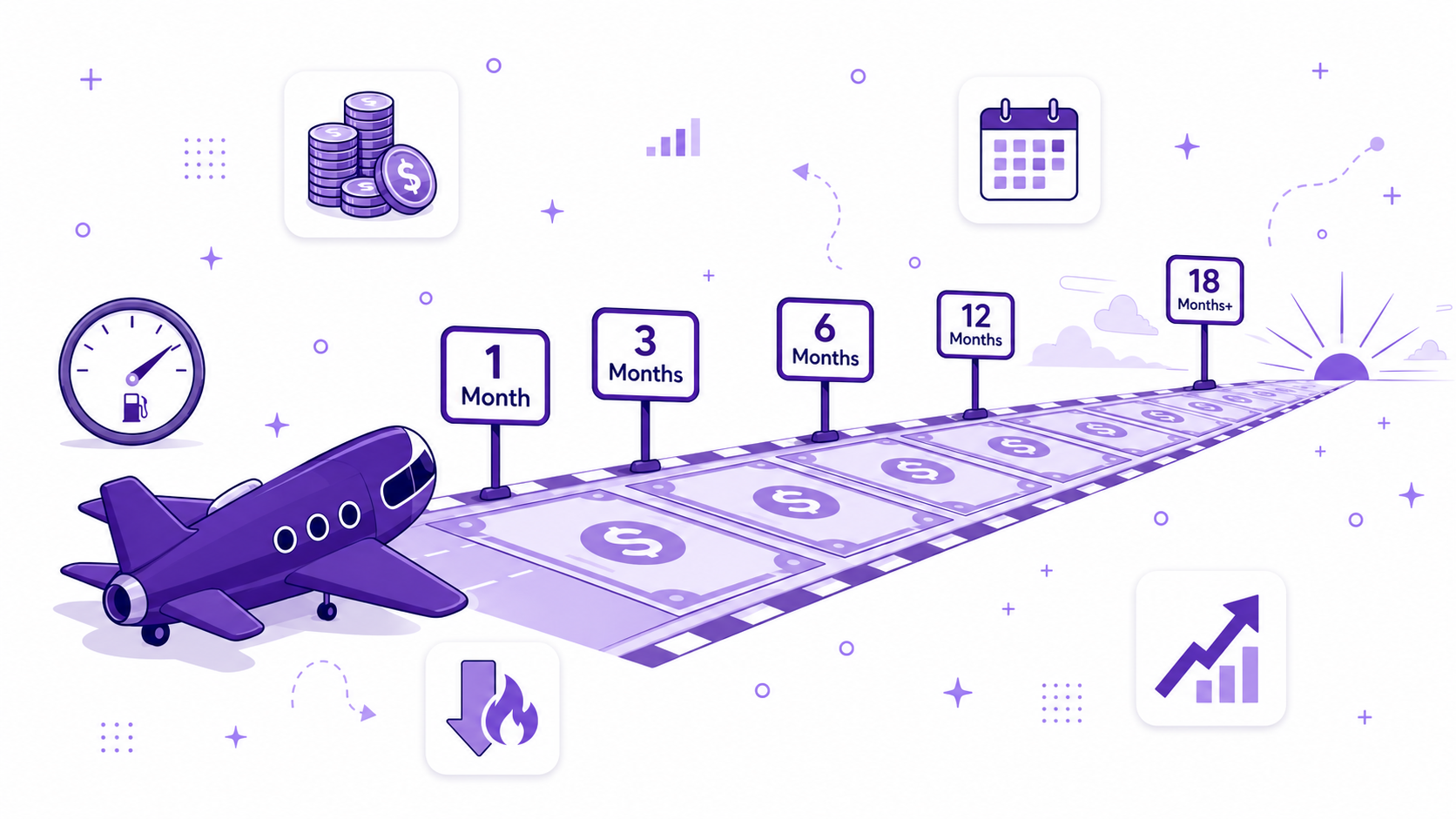
Cash runway is the number that bridges that gap. Simply put, it's how long your business can keep running paying rent, staff, suppliers, utilities using only the money you currently have, with zero new income coming in.
Once you know yours, a lot of other financial decisions start making more sense.
1. What Is Cash Runway — And Why Does It Matter?
Cash runway answers one practical question: if revenue stopped today, how long could you keep the doors open?
Not a trick question. Not a worst-case-scenario exercise. Just an honest look at how far your current cash reserves would stretch against your regular monthly costs.
Profit ≠ Cash Flow (This Distinction Is Everything)
Here's where most small business owners get tripped up and it's completely understandable.
Profit is what your income statement shows after subtracting expenses from revenue. Cash flow is the actual money sitting in your bank account right now. A business can be genuinely profitable and still run out of cash. How? Timing.
Say you run a small furniture workshop. You complete a $15,000 order and send the invoice. Your client has 60-day payment terms so that money won't arrive for two months. But your rent is due Friday. Your wood supplier wants payment next week. Your part-time staff get paid on the 1st.
Your profit looks fine. Your bank account is a different story entirely.
Studies consistently show that cash flow problems not poor products, not lack of customers are among the leading causes of small business failure. A packed order book means nothing if you can't make payroll while waiting to get paid.
Knowing your runway gives you a warning before things reach that point.
2. The 3–6 Month Rule — And When It's Not Enough
Search "how much cash reserve should a small business keep" and you'll get the same answer almost everywhere: three to six months of operating expenses. It's sensible baseline advice for stable, established businesses enough cushion to handle a slow month or an unexpected cost without panic.
But here's what that advice leaves out.
Some Businesses Need 12–18 Months
A product-based business has to purchase inventory months before it makes a single sale. Capital is tied up before any revenue exists. A new business without a predictable client base might take several months just to find its revenue rhythm. In both cases, six months of runway isn't conservative it's cutting it close.
Three key factors change what your number should actually be:
- Industry type — A low-overhead service business with fast-paying clients can operate lean. A manufacturing or retail business dealing with suppliers, stock cycles, and long lead times needs significantly more breathing room.
- Seasonality — If your business earns the bulk of its income in a concentrated window (think tax consultants, gift shops, event vendors), you need enough reserves to fund the quiet months without touching your operating stability.
- Stage of growth — An established business with steady, predictable income can manage a tighter buffer. A business in its first two years or one actively scaling — faces more variables, more unexpected costs, and less predictable income. Longer runway isn't cautious; it's just realistic.
The 3–6 month rule is a starting point. Your industry, your revenue patterns, and your current growth stage should have the final say.
3. How to Calculate Your Cash Runway (Step by Step)
No accountant required. You need two numbers and one formula.
Cash on Hand ÷ Monthly Burn Rate = Runway in Months
What "Cash on Hand" Actually Means
This is your total usable business funds right now your bank balance, any operational savings, petty cash. The key word is usable. Don't include money already mentally allocated to an upcoming bill. You want the genuinely free-to-use figure.
What Is Your Monthly Burn Rate?
Your burn rate is what your business spends each month to stay operational. It breaks into two parts:
- Fixed costs — expenses that stay roughly the same regardless of how busy you are: rent, salaries, loan repayments, insurance, software subscriptions
- Variable costs — expenses that shift with your activity level: raw materials, packaging, shipping, advertising, freelancer fees
Add both together. That's your monthly burn rate.
A Simple Worked Example
Here's a small online homewares business:
Fixed costs:
- Warehouse rent — $1,200
- Part-time salary — $1,800
- Software & subscriptions — $200
- Insurance — $150
- Fixed total: $3,350
Variable costs:
- Materials & packaging — $900
- Shipping — $400
- Advertising — $350
- Variable total: $1,650
Monthly burn rate: $5,000
Cash on hand: $20,000
$20,000 ÷ $5,000 = 4 months of runway
Is four months enough for this business? Maybe. Maybe not. That depends entirely on the factors in the next section.
4. What Affects How Much Runway Your Business Needs
Your ideal runway isn't a fixed number it shifts based on how your specific business operates. Five factors shape it:
Your Business Model
Product-based businesses need more runway than service-based ones inventory costs money before a sale is made. B2B businesses often wait 30, 60, even 90 days to get paid by corporate clients, creating cash gaps that need covering. B2C businesses typically collect at the point of sale, which removes a lot of that pressure.
Revenue Predictability
If your income is consistent subscriptions, retainers, reliable repeat customers a leaner runway can work because your next payment is reasonably certain. If your revenue depends on landing new clients each month, or comes in project-by-project, you need a bigger cushion. Unpredictable income creates unpredictable timing gaps, and those gaps have to come from somewhere.
Seasonality
Businesses with strong seasonal patterns face a specific challenge: funding slow months using income earned during peak periods. A wedding photographer, a summer tour operator, or a back-to-school retailer often needs six months or more in reserves just to maintain stable operations year-round.
Growth Plans
Hiring, expanding, launching a new product line, running a major campaign all of these increase your burn rate before the returns materialise. Growth phases require more runway, not less. Plan for the increased spend in your runway target before it happens.
Access to Credit or External Funding
A healthy credit line or investor backing extends your effective runway. It doesn't replace a cash reserve but if you have reliable access to emergency funding, your baseline reserve requirements can be somewhat lower than a business operating with no safety net at all.
5. Warning Signs Your Runway Is Too Short
A spreadsheet won't always catch these. They tend to show up in the day-to-day feel of running the business weeks or months before a formal cash problem appears.
You're regularly delaying supplier payments Pushing a payment once during an unusual month is normal. Doing it consistently is a pattern and it quietly damages supplier relationships and your business credit standing over time.
Payroll feels uncertain every cycle Paying your team should be one of the most routine things in your business. When it starts requiring careful timing, balance-watching, or hoping a client payment arrives just in time your runway is telling you something.
You're turning down solid opportunities When a good order, a useful hire, or a worthwhile campaign comes along and your immediate reaction is "we can't afford it right now" that's a cash position problem. Healthy runway means you can say yes when it matters.
You're borrowing to cover regular monthly expenses Using a credit line to fund growth is sensible. Using it to cover routine operating costs means the business isn't sustaining itself, and debt is quietly filling the gap which only compounds pressure over time.
None of these are signs of failure. They're early signals. The earlier you catch them, the more options you have to course-correct.
6. How to Extend Your Cash Runway
You don't need a sudden spike in revenue. Meaningful improvements usually come from several smaller adjustments made consistently.
1. Cut costs that aren't earning their place Go through your monthly expenses with fresh eyes not to slash everything, but to find spending that isn't directly supporting operations or growth. Unused software subscriptions, outdated vendor contracts, services you've outgrown. Reducing your burn rate by even 10–15% can add weeks or months to your runway without touching what actually matters.
2. Get paid faster Invoice immediately instead of batching at month-end. Request 30–50% deposits upfront on new projects this is standard practice in most industries and most clients expect it. For regular clients, consider moving to a retainer model so predictable income lands at the start of each month rather than being chased after the fact.
3. Renegotiate terms with suppliers Most suppliers are open to conversation, especially with clients who pay reliably. Extending terms from 14 days to 30 or 45 days gives you more time to collect from your own customers before money needs to go out. Even small improvements here reduce monthly cash pressure noticeably.
4. Build a buffer as a fixed expense Don't wait for a surplus to start saving. Set aside a small, consistent amount every month even if it feels modest. Over six to twelve months, it compounds into real protection against slow periods, late payers, or unexpected costs. Consistency matters far more than the starting amount.
5. Use credit lines strategically — not habitually Apply when your business is healthy, not when you're under pressure. Keep it for genuine short-term gaps bridging a delayed payment, covering a time-sensitive opportunity. The moment it starts funding routine monthly expenses, it's a warning sign, not a solution.
7. Setting Your Own Runway Target
There's no universal number. The right runway is the one that honestly reflects your business its model, its obligations, its revenue patterns, and where it's heading.
Four questions will get you there:
How predictable is your revenue? Consistent monthly income means a shorter runway can work. Significant fluctuation means you need more buffer to absorb the gaps.
How heavy are your fixed obligations? High fixed costs staff, leases, loan repayments leave less room to manoeuvre when income dips. The higher your fixed commitments, the longer your runway should be.
Are you planning to invest in growth in the next 12 months? If yes, your burn rate is going to rise before the returns show up. Factor that into your target now, not when it's already happening.
How concentrated is your client base? A business heavily dependent on one or two major clients carries real risk. A longer runway offers a meaningful buffer against the impact if one of those relationships changes.
Once you have a target, treat it as a living number review it every quarter, or whenever something significant changes in your costs or revenue. A number you set last year may not reflect where your business actually stands today.
And think of runway as more than a safety net. Businesses with strong runway make better decisions they can invest when timing is right, negotiate from a position of strength, and absorb setbacks without being pushed into reactive choices they wouldn't otherwise make.
Your runway target is, in the end, a measure of how much control you want to keep over your own business.
Conclusion
Cash runway isn't a complicated concept, but it's one of the most telling numbers in your business. It shows you exactly how much time, flexibility, and breathing room you actually have and when you know it, you stop reacting to problems and start seeing them coming. If you haven't calculated yours yet, spend fifteen minutes on it today: divide your cash on hand by your monthly burn rate, track it every quarter, and adjust whenever your costs or revenue shift. The businesses that grow sustainably aren't always the most profitable ones. They're the ones that stay financially aware and act on what they know.
Frequently Asked Questions
X Q: What is a good cash runway for a small business? For most stable small businesses, 3–6 months is a reasonable baseline. Seasonal businesses, startups, and product-based companies often need closer to 12–18 months. Your industry, revenue consistency, and cost structure should determine your actual target.
Q: What's the difference between cash runway and cash flow? Cash flow is the ongoing movement of money in and out of your business. Cash runway is a snapshot how long your current reserves would last if revenue stopped completely. Both matter, but for different reasons.
Q: Can a profitable business run out of cash runway? Yes, and it happens regularly. If clients pay on 60–90 day terms, strong profit figures on paper don't help you cover this week's costs. The timing mismatch between earning and receiving money is one of the most common causes of small business failure.
Q: How often should I recalculate my runway? At minimum, every quarter. Also recalculate when costs change significantly, when you take on new commitments, or when your revenue pattern shifts. It should be a live metric, not something you calculate once and forget.
Q: What is a monthly burn rate? The total your business spends each month to keep running fixed costs (rent, salaries, subscriptions, insurance) plus variable costs (materials, shipping, advertising). Add them together and you have your burn rate.
Q: Is a credit line a good way to extend runway? It can be when used carefully. Apply when your business is healthy, keep it as a true backup, and use it only for genuine short-term gaps. If you're using it regularly to cover basic operating expenses, that's a signal to address the underlying cash position, not a sustainable strategy.
Q: What's the fastest way to improve my cash runway? Three things that work quickly: invoice immediately instead of at month-end, start requesting upfront deposits on new work, and review your monthly costs for anything that isn't actively supporting operations. These alone can meaningfully shift your position within 30–60 days.