Business Loan Readiness Checklist: QBiz Blog
Lenders look at the same handful of things before they say yes. Use this 10-point checklist to check your revenue, cash flow, documents, and debt before you apply.
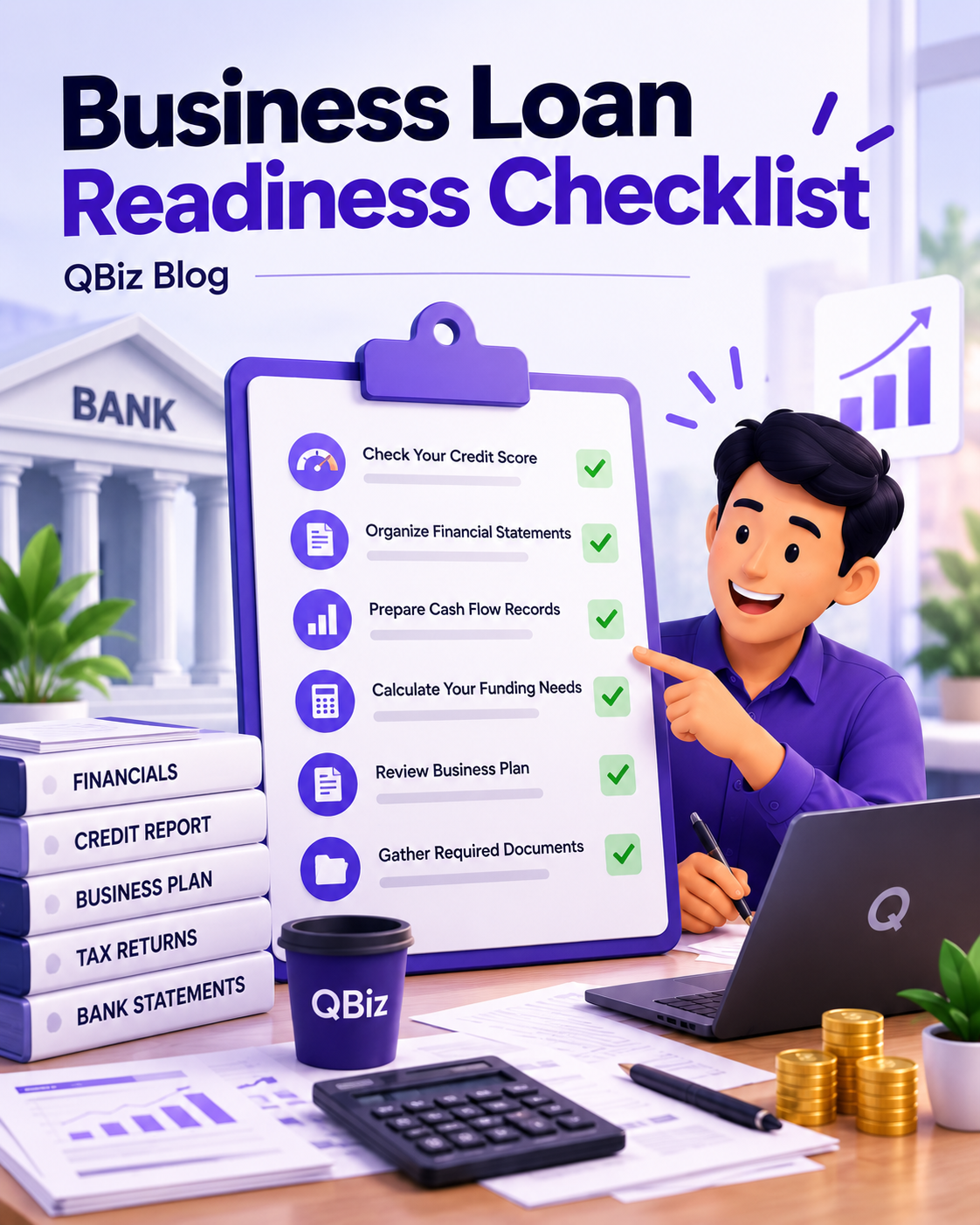
Is Your Business Ready for a Loan? A 10-Point Checklist
Applying for a business loan is a bit like sitting an exam. If you've prepared, it goes smoothly. If you haven't, it shows up fast, usually as a delay, a request for more paperwork, or a "no" you didn't see coming.
The good news is that readiness isn't a mystery. Lenders tend to look at the same handful of things. This business loan readiness checklist walks you through ten of them, so you can see where you stand before you apply.
1. You Know Exactly What the Money Is For
"We need working capital" is a start, but it isn't a plan. Lenders want to see a specific use: buying inventory ahead of a busy season, replacing a van, covering payroll while invoices clear.
Write it in one sentence. If you can't, spend more time here before moving on.
2. You Know How Much You Need (and Can Repay)
Borrowing too little leaves you short. Borrowing too much leaves you stretched.
Work backwards from the purpose. Add up the real cost, include a small buffer, then check what monthly repayment your business could carry without squeezing everything else.
3. Your Revenue Is Reasonably Steady
Lenders usually care less about one great month and more about consistency. Look at your last 6 to 12 months of deposits. Are they steady, growing, or all over the place?
Seasonal businesses can still qualify. It just helps to explain the pattern before someone has to ask.
4. You've Been Operating Long Enough
Many lenders prefer to see some operating history, often a year or more, though requirements differ by program. Newer businesses aren't shut out, but the options may be narrower, and you may need to lean on other strengths like strong revenue or collateral.
5. Your Credit Profile Is in Decent Shape
For most small businesses, lenders look at the owner's personal credit as well as any business credit history. You don't need a perfect score, but you should know where you stand and whether anything on your report needs fixing or explaining.
6. Your Cash Flow Can Cover the Payments
This is the one that trips people up. A profitable business can still be short on cash when the repayment is due.
Lenders often compare your income against your existing debt payments plus the new one. A simple way to check yourself: divide your monthly operating income by your total monthly debt payments, including the proposed loan. Many lenders like to see a comfortable cushion above 1.0, though the exact threshold varies.
If the cushion is thin, a smaller amount or a different loan type may suit you better.
7. Your Financial Documents Are Organized
Nothing slows an application like hunting for paperwork. Typical documents needed for a business loan include:
• 3 to 12 months of business bank statements
• A profit and loss statement and balance sheet
• Recent business and personal tax returns
• A list of current debts
• Business registration details and an ID
Requirements change from one program to the next, so treat this as a starting list, not a guarantee. Having these in one folder before you apply is half the battle.
8. You Understand Your Existing Debt
List every loan, credit line, and card balance the business carries, along with the payment and the remaining balance. Lenders will see it anyway. Seeing it first lets you decide whether new borrowing makes sense or whether paying something down comes first.
9. Business and Personal Money Are Separate
A business bank account, a registered business, and clean records all make you easier to evaluate. If personal and business spending are mixed together, a lender has to guess which is which, and guessing rarely works in your favor.
10. You've Matched the Loan Type to the Need
Different needs call for different tools. A rough guide:
• Payroll, inventory, day-to-day costs: working capital loan or a line of credit
• Machinery or vehicles: equipment financing
• Cash stuck in unpaid invoices: invoice financing
• Longer-term, larger projects: SBA-backed options
Choosing the wrong product is a common reason people overpay or get declined. QBiz Lending covers nine programs, so you can see which ones fit without applying to each separately.
So, How Did You Score?
Count how many boxes you can honestly tick.
• 8 to 10: You're in good shape. Time to check your options.
• 5 to 7: You're close. Fix the weak spots first, usually documents or cash flow.
• Under 5: Not a failure. It just means a few months of prep will improve both your chances and your terms.
Getting Your Numbers Ready
Points 3, 6, and 8 depend on knowing your numbers well. If your data is spread across Stripe, Shopify, QuickBooks, and a bank account, that's slow to pull together.
The QBiz AI Business Advisor connects to those tools so you can ask questions in plain English, like "Why does cash flow feel tight?" or "Which costs are reducing margin?" It's a quick way to spot weak points before a lender does.
Ready to See Where You Stand?
If your checklist looks solid, the next step is to see what you might qualify for. QBiz Lending lets you check eligibility in about two minutes using a soft credit inquiry, which doesn't affect your credit score. You can also talk to a human loan specialist at any point.
Check your eligibility with QBiz Lending and see which programs fit your business.
Frequently Asked Questions
What do I need to qualify for a small business loan? Most lenders look at time in business, revenue, cash flow, credit, and existing debt. Requirements vary by program and lender, and approval isn't guaranteed.
How much revenue do I need to get a business loan? There's no single number. It depends on the loan type and amount. Lenders mainly want to see steady revenue that can comfortably cover repayments.
Will checking my eligibility hurt my credit? Not with QBiz Lending. Checking eligibility uses a soft inquiry, and a hard inquiry only happens if you choose a program and complete a full application.
Can I get a business loan with a new business? Sometimes. Options may be limited, and lenders may weigh other factors more heavily, such as revenue, personal credit, or collateral.
How long does it take to prepare? If your documents are organized, you can often be ready within days. If you need to clean up records or reduce debt, expect a few weeks to a few months.