Best Online Business Banking Alternatives for Small Businesses
Not sure which online business bank account fits? Learn the four types of alternatives, seven things to compare, and how to choose.
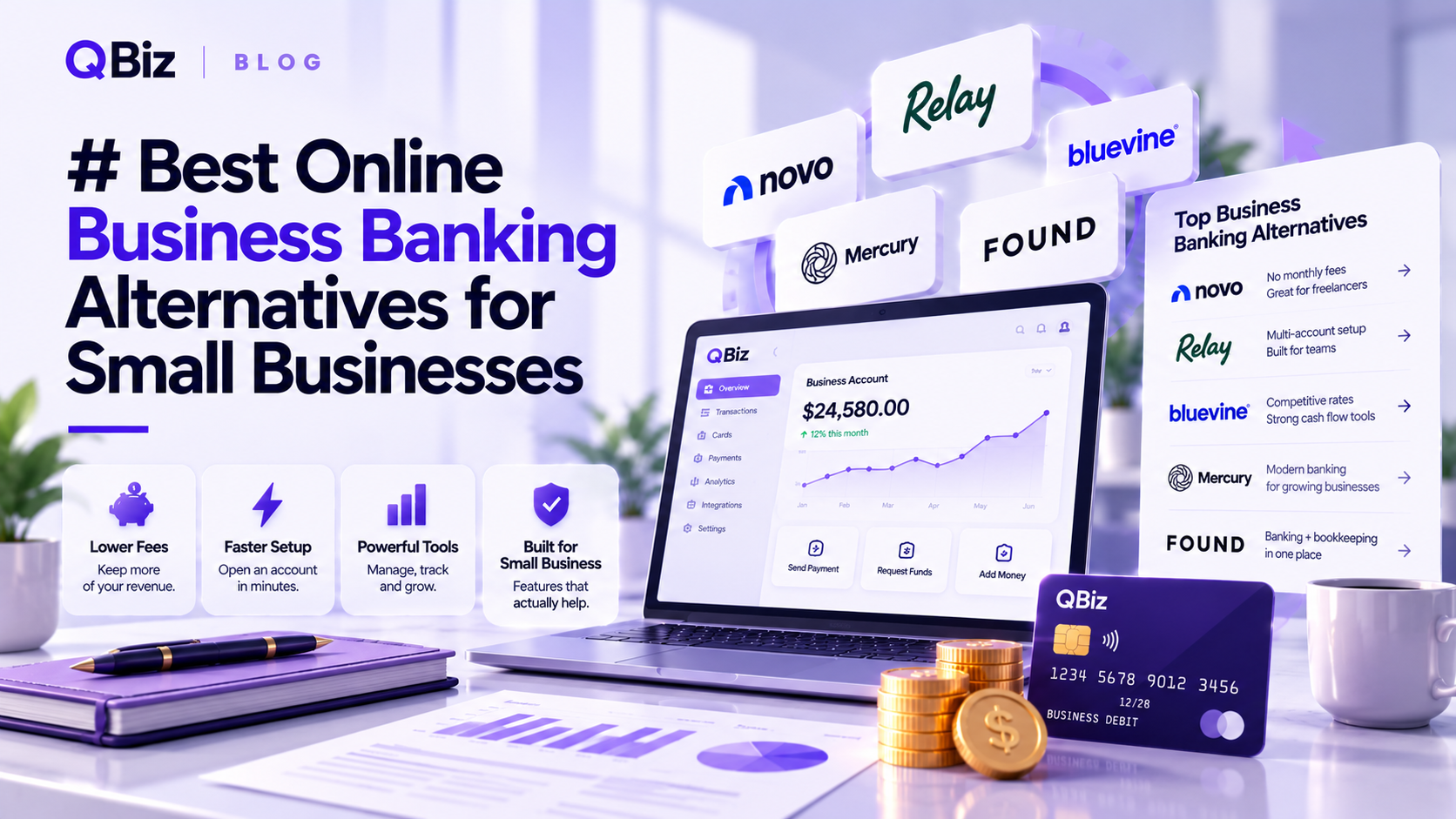
Best Online Business Banking Alternatives for Small Businesses
Short answer: the best online business banking alternative is the one that fits how your business actually handles money. If you take cash, look for cash deposit support. If you run on software like Stripe, Shopify, and QuickBooks, look for strong integrations. If you want advice and financing in the same place, look beyond the account itself. Fees, FDIC coverage, and security matter in every case.
Online business banking has grown quickly, which is great for choice and confusing for decisions. This guide explains the main types of alternatives, what to compare, and how to narrow the list without reading twenty review sites.
What Is an Online Business Bank Account?
An online business bank account is a checking account you open and manage digitally, with little or no branch access. Many are offered by fintech companies that work with a partner bank, which holds the deposits. Others are offered by banks that operate fully online.
Both can be a good fit. What matters is knowing who holds your money and whether your deposits are FDIC-insured, which generally covers up to $250,000 per depositor, per bank, per ownership category.
Why Do Small Businesses Look for Alternatives?
The reasons come up again and again. Some owners need to deposit cash, and not every online account supports it. Some want a real person to call. Some outgrow the basics and want invoicing, cards, or lending in the same place. Others are simply tired of piecing together five tools to see one financial picture.
None of this means your current account is bad. It means your needs changed. If you’re moving away from a specific provider, our guide on what to compare in a Mercury alternative covers the details.
What Types of Online Business Banking Alternatives Exist?
There are four main types, and each solves a different problem.
Online-first business banks and fintech platforms. Digital accounts built for startups and small teams, often with low fees, quick setup, and integrations. Providers such as Relay and Bluevine fall here, and some support cash deposits through partners. Always confirm current terms on the provider’s site.
Credit unions. Member-owned institutions that often offer lower fees and personal service. Online tools vary widely, so check how modern the app is.
Traditional banks with strong online tools. Best if you want branches, in-person help, and easy cash deposits, and you’re comfortable paying more for them.
All-in-one financial platforms. Services that combine insight, financing, and payments, and sit alongside your account instead of replacing it. This category is growing as AI makes it possible to ask questions about your own numbers.
If you’re still weighing banks against fintechs, our guide to choosing your first business bank account explains the tradeoffs in plain English.
What Should You Compare Before Switching?
Seven things decide most outcomes.
Fees. Look past the monthly price. Check wires, ACH transfers, overdrafts, cash deposits, and extra users or cards.
Who holds your deposits. Find the partner bank’s name and how FDIC coverage applies to your account.
Cash deposits. If you handle cash, confirm exactly how and where you can deposit it, and what it costs.
Integrations. Your account should connect to accounting software, payment processors, and your online store.
Support. Find out whether you can reach a person when something breaks.
Security. Look for two-factor authentication, clear security information, and read-only access where possible.
Room to grow. Ask whether the provider supports more users, higher volume, and financing later.
For a deeper look at what separates useful AI features from marketing, see our guide on what to look for in an AI business bank account.
How Do You Choose the Right One for Your Business?
Start with your biggest need, not the longest feature list.
A business that handles lots of cash should rule out any account without a practical deposit option first. An online seller should start with integrations and low fees. A growing company with a lot of tools should prioritize visibility, meaning one clear view of revenue, expenses, and cash flow. A business that expects to borrow should look at how financing fits in.
Then narrow to two or three options and estimate a normal month of fees for each. That comparison usually makes the answer obvious.
Banking Is Only One Piece
An account holds money. It doesn’t tell you why cash feels tight, whether your ads are paying off, or which loan fits. Many owners fix this by adding tools on top of the account they already have.
myQBiz.ai is built for that gap. The free AI Business Advisor connects to Stripe, Shopify, QuickBooks, and Meta Ads, and answers plain-English questions about your revenue, cash flow, and profitability. It works alongside whichever account you choose, and it’s free for launch users with no credit card required.
When you’re ready for funding, myQBiz.ai Lending puts nine loan programs into one guided application with a human loan specialist. And if you also need to compare payment processors, our guide to the best Square alternatives for small businesses covers real options side by side.
Key Takeaways
Online business banking alternatives fall into four types, and each fits a different need.
Know who holds your deposits and how FDIC coverage applies.
Confirm cash deposit support before you switch if you handle cash.
Compare a full month of fees, not just the monthly price.
An account stores money. Advice and financing tools help you use it.
Frequently Asked Questions
What is the best online business banking alternative? There isn’t one best choice. It depends on whether you handle cash, which tools you use, and whether you want financing in the same place. Match the account to your biggest need.
Are online business bank accounts safe? They can be. Check who holds the deposits, whether they’re FDIC-insured, and what security controls the provider offers, such as two-factor authentication.
Can I use an online business bank account if I take cash? Some support cash deposits through partners or retail locations, but not all do. Confirm how it works and what it costs before you open one.
Do I need to switch banks to get better financial insight? No. Tools like the myQBiz.ai AI Business Advisor connect to your existing accounts and software, so you can get clearer numbers without moving your money.
How do I switch business bank accounts? Open the new account first, move your recurring payments and deposits over, then close the old one once everything clears. Keep both open briefly to avoid missed payments.
How many business bank accounts should I have? Many owners use one main checking account and add a separate account for taxes or savings. Your accountant can advise what fits your situation.
See Your Whole Business Clearly
Whichever account you choose, you’ll make better decisions when your numbers are easy to read.
Connect your tools and ask your first question with the free AI Business Advisor. No credit card, no trial clock.